What Is a Dedicated Electrical Circuit?
Most general-use circuits supply several outlets, lights, or devices throughout an area of the home. A dedicated circuit is reserved for a specific appliance or piece of equipment and normally has its own breaker in the electrical panel.
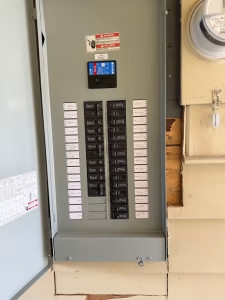
Circuit breakers protect wiring by interrupting power when electrical current exceeds a safe level. Separating high-demand equipment from general-use circuits can help reduce overloads and prevent unrelated outlets or lights from losing power when the equipment is operating.
What Appliances May Need Dedicated Circuits?
Large appliances and high-energy equipment often have individual circuits because of the amount of electricity they use. Common examples may include:
- Electric ranges and ovens
- Dishwashers
- Microwaves
- Refrigerators and freezers
- Washers and electric dryers
- Water heaters
- Heating and cooling equipment
- Sump or well pumps
- Hot tubs
- EV chargers
- Shop equipment
- Larger garbage disposals
The exact requirements vary by appliance, manufacturer instructions, electrical load, and the way the equipment is installed. Some large appliances have their own breaker, and ESFI recommends having a qualified electrician install new circuits for high-energy-use devices.
Why Dedicated Electrical Circuits Matter
A high-demand appliance connected to a shared circuit can compete with lights, outlets, and other equipment for the circuit’s available capacity.
Possible signs that a shared circuit is struggling include:
- A breaker that trips when the appliance starts
- Lights that dim or flicker during operation
- Warm outlets or switches
- Buzzing or crackling sounds
- An appliance that operates inconsistently
- Heavy reliance on power strips or extension cords
These symptoms do not always mean a dedicated circuit is the only solution. They may also indicate damaged wiring, a loose connection, an overloaded electrical system, or a problem with the appliance itself.
When Should You Add a Dedicated Circuit?
Installing a New Appliance
Before installing a new appliance, check its electrical specifications. The voltage, amperage, plug configuration, and manufacturer instructions can help determine whether a new circuit is necessary.
The outlet may physically fit the plug while the existing circuit is still unsuitable for the equipment. An electrician can verify the circuit size, wiring, breaker, and available panel capacity before installation.
Remodeling a Kitchen or Bathroom
Kitchen and bathroom remodels frequently involve new appliances, receptacles, lighting, and electrical safety requirements. Equipment that previously shared a circuit may need to be separated as part of the updated electrical layout.
Planning the circuits before cabinets, drywall, and finished surfaces are installed can make the project more efficient and help ensure the space supports how it will actually be used.
Adding an EV Charger or Hot Tub
EV chargers and hot tubs can place significant new demand on an electrical system. These installations generally require more than simply adding an outlet.
An electrician may need to evaluate:
- Available electrical-service capacity
- Panel space
- Equipment voltage and amperage
- Wiring distance
- Required disconnecting means
- Ground-fault protection
- Manufacturer installation instructions
The evaluation may show that the existing panel can support the equipment, or that a load study, subpanel, service upgrade, or other improvement is needed.
Adding Garage, Shop, or Outdoor Equipment
Air compressors, welders, power tools, pumps, heaters, and other equipment may require individual circuits depending on their electrical demands.
Repeatedly using extension cords is not a substitute for permanent wiring. ESFI notes that heavy reliance on extension cords may indicate that additional outlets are needed.
Can You Solve the Problem by Using Another Outlet?
Not necessarily. Several outlets in the same room—or even in different rooms—may be connected to one circuit. Moving an appliance to a nearby outlet may place it on the same breaker and leave the original problem unchanged.
Checking the electrical-panel directory can help identify which breaker controls the outlet, although older or handwritten labels are not always accurate. An electrician can trace the circuit and confirm which outlets and equipment share it.
Does a Dedicated Circuit Mean You Need a New Panel?
Not always. A dedicated circuit can often be added to an existing electrical panel when there is sufficient capacity and appropriate space.
A panel upgrade or subpanel may be considered when:
- The panel has no available breaker positions
- The electrical service cannot support the added load
- The existing equipment is damaged or obsolete
- Several new circuits are being added
- A remodel substantially changes the home’s electrical demand
A professional evaluation can determine what is actually necessary without automatically recommending a larger project.
Why Professional Installation Matters
Installing a dedicated circuit involves more than running a wire to a new outlet. The circuit must be properly sized for the equipment and installed with compatible conductors, breakers, receptacles, protection devices, and grounding methods.
A licensed electrician can:
- Review the equipment specifications
- Calculate the expected electrical load
- Evaluate the panel and service capacity
- Select the correct circuit components
- Obtain required permits
- Complete the installation safely
- Coordinate the required inspection
ESFI recommends using qualified electricians for home electrical work and having new circuits installed for high-energy-use devices.
Does Your Appliance Need a Dedicated Circuit?
A dedicated electrical circuit can provide the capacity needed for appliances and equipment to operate safely and reliably. It may also help prevent repeated breaker trips, dimming lights, and overloads caused by placing too many electrical loads on one circuit.
Cove Electric, Inc. provides dedicated circuit installation, panel evaluations, load studies, remodel wiring, EV charger installation, and residential electrical upgrades throughout Central Oregon.