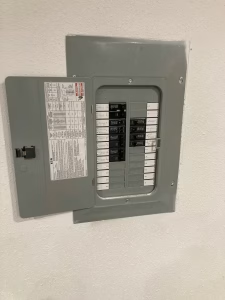
What Is an Electrical Subpanel?
Your main electrical panel receives power from the utility and distributes it to the circuits throughout the property. An electrical subpanel is supplied by a feeder from that main panel and then distributes power to another group of branch circuits.
Like the main panel, a subpanel contains circuit breakers that protect individual circuits from excessive current. Breakers are intended to interrupt power when current exceeds a safe level for the wiring they protect.
A subpanel may serve:
- A garage or workshop
- A home addition
- A remodeled area
- An accessory dwelling unit
- An outbuilding
- New kitchen or appliance circuits
- Heating and cooling equipment
- Pumps or agricultural equipment
- Several circuits grouped in one area
Why Would You Install a Subpanel?
The Main Panel Is Out of Breaker Space
One common reason for installing a subpanel is that the main panel does not have enough available breaker positions for the circuits being added.
A subpanel provides additional circuit spaces without forcing every new circuit to originate from the main panel. However, available breaker space and available electrical capacity are not the same thing. An electrician must verify that the service can support the added demand.
You Are Remodeling or Building an Addition
A remodel or addition may require several new circuits for lighting, receptacles, appliances, heating equipment, or other electrical loads.
Locating a subpanel near the remodeled area can simplify circuit distribution and make future maintenance easier. It may also reduce the need to run numerous individual branch circuits all the way back to the main electrical panel.
You Are Adding a Garage, Shop, or Outbuilding
Detached garages, workshops, agricultural buildings, and other structures may need circuits for lighting, receptacles, tools, heaters, pumps, or equipment.
Instead of running a separate cable from the house for each circuit, an electrician may install a properly sized feeder to a subpanel at the secondary building. The appropriate design depends on the planned loads, wiring distance, equipment requirements, and applicable electrical codes.
You Expect to Add More Equipment Later
A subpanel may also provide room for planned future circuits. For example, a homeowner remodeling a garage may eventually want an EV charger, additional receptacles, shop equipment, or electric heat.
Planning ahead can sometimes make future additions easier, but the feeder and overall electrical system still need to be sized appropriately. Installing a larger subpanel enclosure does not create additional service capacity by itself.
Does an Electrical Subpanel Increase Your Home’s Capacity?
No. An electrical subpanel provides additional circuit-distribution space, but it does not increase the amperage supplied by the utility.
The main electrical service still limits how much power the property can safely use. Before adding a subpanel and new loads, an electrician may perform an electrical load calculation to evaluate the service, feeders, existing appliances, and planned equipment. Electrical-service sizing is based on the calculated load and the equipment supplying the property.
Depending on the results, the project may require:
- A subpanel only
- New dedicated circuits
- A larger feeder
- Load-management equipment
- Replacement of damaged or obsolete equipment
- An electrical service upgrade
The correct solution depends on the property’s actual electrical demand—not simply the number of open breaker spaces.
Subpanel vs. Service Upgrade
A subpanel and a service upgrade solve different problems.
An electrical subpanel adds circuit-distribution space and may bring circuit breakers closer to the area they serve.
A service upgrade increases or modifies the equipment that supplies electricity to the property. It may involve the meter, service conductors, main disconnect, panel, grounding and bonding components, and utility coordination.
A service upgrade may be necessary when the existing electrical service cannot support the proposed loads. A subpanel may be sufficient when the service has available capacity but the property needs more circuit spaces or a better distribution layout.
Subpanel vs. Dedicated Circuit
A dedicated circuit supplies one specific appliance or piece of equipment. A subpanel supplies multiple branch circuits.
For example, an electrician might install:
- One dedicated circuit for a microwave
- One dedicated circuit for an EV charger
- A subpanel that supplies several garage circuits
- A subpanel that supplies lighting, receptacles, heating, and equipment in an addition
A subpanel does not eliminate the need for properly sized dedicated circuits. Each circuit must still be designed for the equipment it supplies.
Can a Subpanel Help With an Overloaded Electrical System?
Not by itself.
An overloaded system occurs when circuits or service equipment are being asked to handle more electrical demand than they can safely support. Adding a subpanel may provide more breaker spaces, but it does not solve insufficient service capacity.
Warning signs that deserve evaluation include:
- Frequent breaker trips
- Lights that dim when equipment starts
- Warm outlets or switches
- Buzzing or crackling sounds
- Heavy use of extension cords
- Limited panel space
- Several large appliances sharing circuits
Circuit breakers and fuses help protect wiring from excessive current, but recurring overload symptoms should be evaluated rather than treated by repeatedly resetting breakers.
What Determines the Size of a Subpanel?
An electrician considers several factors when designing a subpanel installation:
- The number of circuits needed
- The expected electrical load
- Planned future equipment
- Feeder conductor size
- Voltage requirements
- Distance from the main panel
- Available service capacity
- Panel location and working clearance
- Grounding and bonding requirements
- Manufacturer instructions
- Applicable electrical codes
Electrical equipment must also have adequate working space so it can be safely accessed, inspected, and serviced. NFPA guidance discusses required clearances around electrical equipment likely to require examination or maintenance.
Does an Electrical Subpanel Require a Permit?
Electrical permits are generally required in Oregon when permanent wiring or electrical devices are installed or altered. Requirements and permitting authorities can vary by location and project, so the contractor should confirm the appropriate process before work begins.
A permitted installation may include inspections of the feeder, panel, branch circuits, grounding, bonding, labeling, and other applicable components.
Why Professional Installation Matters
Installing a subpanel involves more than mounting an empty breaker box. The electrician must verify service capacity, size the feeder, select compatible equipment, establish the required grounding and bonding arrangement, protect the conductors, and coordinate permitting and inspection.
NFPA identifies the National Electrical Code as the benchmark for safe electrical design, installation, and inspection. Oregon’s Electrical Specialty Code applies to nonexempt electrical installations and alterations within the state.
Improper panel work can create shock, overheating, and fire hazards. Electrical panel installation and modification should be completed by a properly licensed electrician.
Do You Need an Electrical Subpanel?
An electrical subpanel may be a good option when your property needs additional circuit spaces, a more convenient distribution point, or several new circuits in a garage, addition, shop, or outbuilding.
Before recommending one, an electrician should determine whether the existing service has sufficient capacity and whether a subpanel, dedicated circuit, load-management system, or service upgrade is the most appropriate solution.
Cove Electric, Inc. provides electrical subpanel installation, load calculations, panel evaluations, dedicated circuits, remodel wiring, and service upgrades throughout Central Oregon.