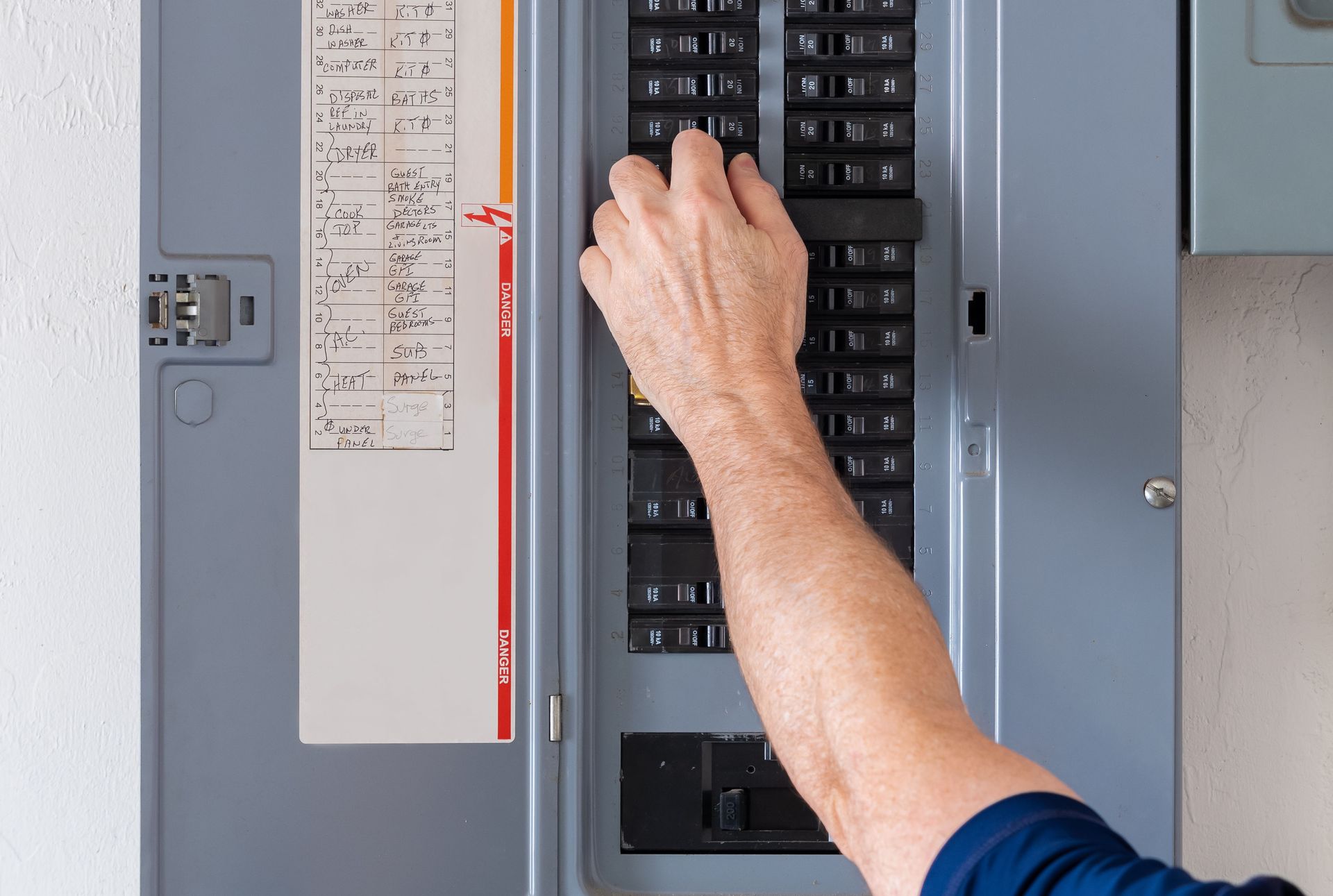
Homes today use significantly more electricity than they did 20–30 years ago. Between large appliances, home offices, electric vehicles, and smart home systems, electrical demand has increased dramatically.
So how much electrical capacity does a modern home actually need?
Let’s break it down.
What Does “Electrical Capacity” Mean?
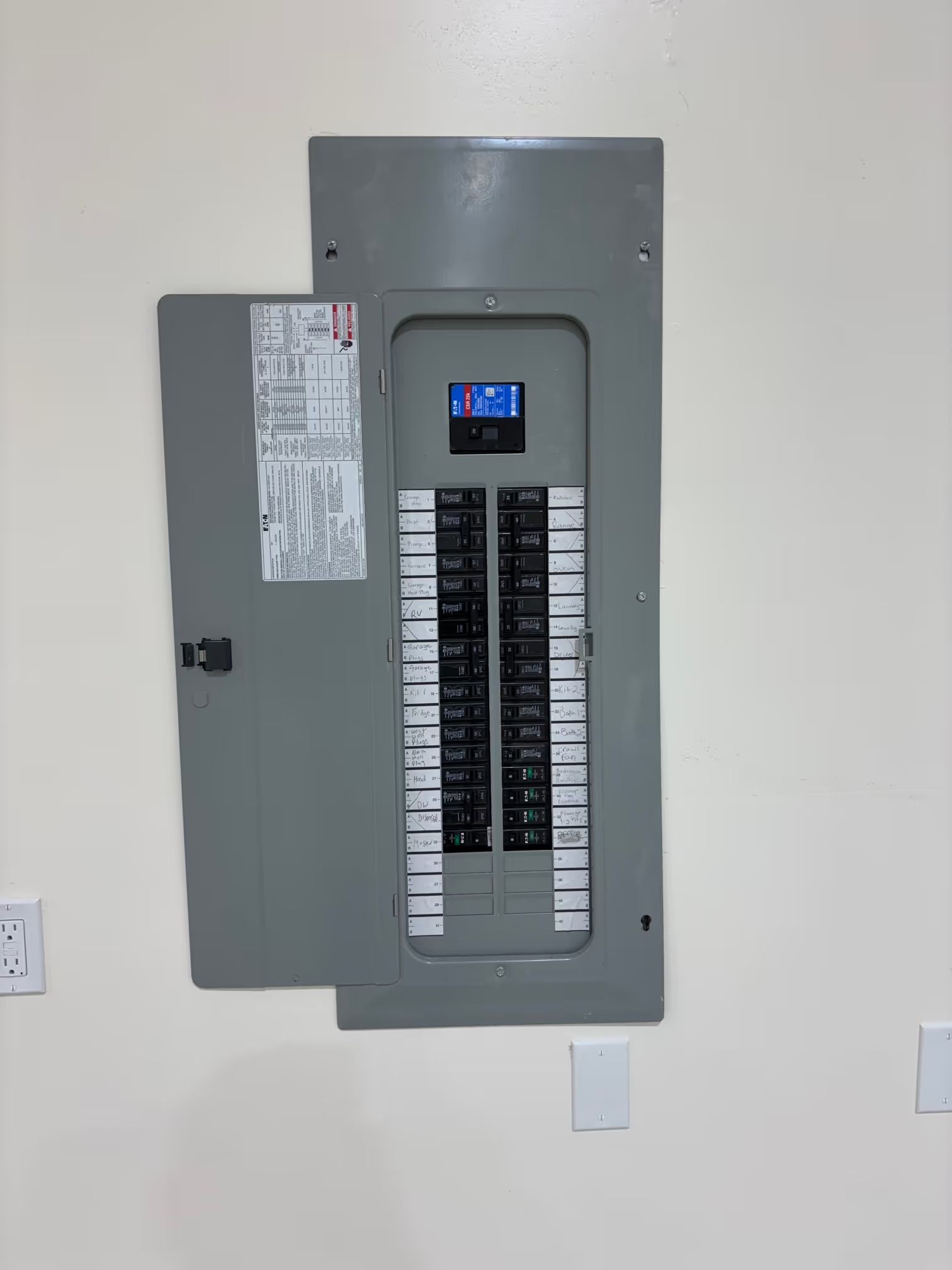
Electrical capacity refers to how much power your home’s electrical panel can safely handle at one time. This is measured in amps.
Most homes fall into one of these categories:
- 100-amp service – Common in older homes
- 150-amp service – Transitional capacity
- 200-amp service – Standard for most modern homes
- 400-amp service – Larger homes with high demand
Your panel’s main breaker will list the amperage rating.
Why Older Homes Often Struggle
Many homes built before the early 2000s were designed for:
- Basic kitchen appliances
- Standard HVAC systems
- Limited electronics
- No EV chargers
Today, a typical household may have:
- Multiple refrigerators or freezers
- Large HVAC systems
- Tankless water heaters
- Electric ranges and dryers
- Home office setups
- Electric vehicle chargers
- Hot tubs or pool equipment
That’s a big jump in demand.
When 100 Amps Isn’t Enough
A 100-amp panel can still function in smaller homes, but it often becomes limiting when:
- Breakers trip frequently
- You’re planning a remodel
- You’re adding a hot tub
- You’re installing an EV charger
- You need additional dedicated circuits
If your system is maxed out, adding more load without upgrading can create safety risks.
Why 200 Amps Is the Modern Standard
For most households, 200-amp service provides:
- Capacity for modern appliances
- Room for EV charging
- Flexibility for future upgrades
- Reduced strain on circuits
- Better overall system stability
It’s not just about today, it’s about planning for what you may add in the next 5–10 years.
How Do You Know What Your Home Needs?
An electrician performs a load calculation to determine how much power your home requires.
This considers:
- Square footage
- Appliance types
- Heating and cooling systems
- Planned additions
- Specialty equipment
Guessing isn’t recommended, proper calculations ensure safety and code compliance.
Is Upgrading a Big Project?
Upgrading electrical service typically involves:
- Replacing the panel
- Updating grounding
- Coordinating with the utility company
- Permits and inspection
Most upgrades can be completed in a day, depending on the complexity of the system.
The Bottom Line
Electrical demand isn’t what it used to be. If your home is older or you’re planning upgrades, it may be time to evaluate whether your current service can handle it safely.
Modern electrical capacity isn’t about luxury, it’s about safety, reliability, and future-proofing your home.
If you’re unsure whether your panel is keeping up, a professional evaluation can give you clarity before small issues turn into bigger ones.